
Table of Contents
Details of GDTJ45 Builder Software: Everything You Need to Know
Introduction
If you’ve recently searched for details of gdtj45 builder software, you’re probably trying to understand what this tool is, how it works, and whether it’s the right solution for your needs. While the name has appeared in online discussions and search queries, publicly available information about GDTJ45 Builder Software is quite limited. Because of that, many users are looking for a clear explanation of its purpose, features, and possible applications.
This guide provides an overview based on the available information and general builder software concepts. Whether you’re a beginner exploring development tools or an experienced user comparing builder platforms, this article explains everything in simple, easy-to-understand language.
What Is GDTJ45 Builder Software?
Definition and Background
GDTJ45 Builder Software appears to be a specialized builder tool designed to simplify software creation, configuration, or project development through an organized interface. However, there is no widely recognized official documentation or verified vendor information publicly available for a product by this exact name.
As a result, anyone researching the details of gdtj45 builder software should verify the source of the software before downloading or using it.
Overview of the Software
Builder software generally helps users:
- Create applications faster
- Configure projects with minimal manual coding
- Organize project components
- Automate repetitive development tasks
- Improve workflow efficiency
If GDTJ45 follows standard builder software principles, it would likely focus on making project creation easier through automation and simplified configuration.
Who Uses It and Why?
Potential users include:
- Software developers
- IT professionals
- System administrators
- Technical teams
- Businesses automating internal workflows
- Students learning software development
These users typically seek builder software to reduce development time and improve consistency.
Key Features of GDTJ45 Builder Software
Although verified specifications are limited, builder software commonly includes the following capabilities.
Core Functionalities
Typical builder software features include:
- Project creation wizard
- Configuration management
- Template-based development
- Automated build processes
- File organization
- Deployment preparation
- Error checking
- Version management support
These features help reduce manual work throughout the development cycle.
User Interface and Usability
Most modern builder applications focus on user-friendly interfaces featuring:
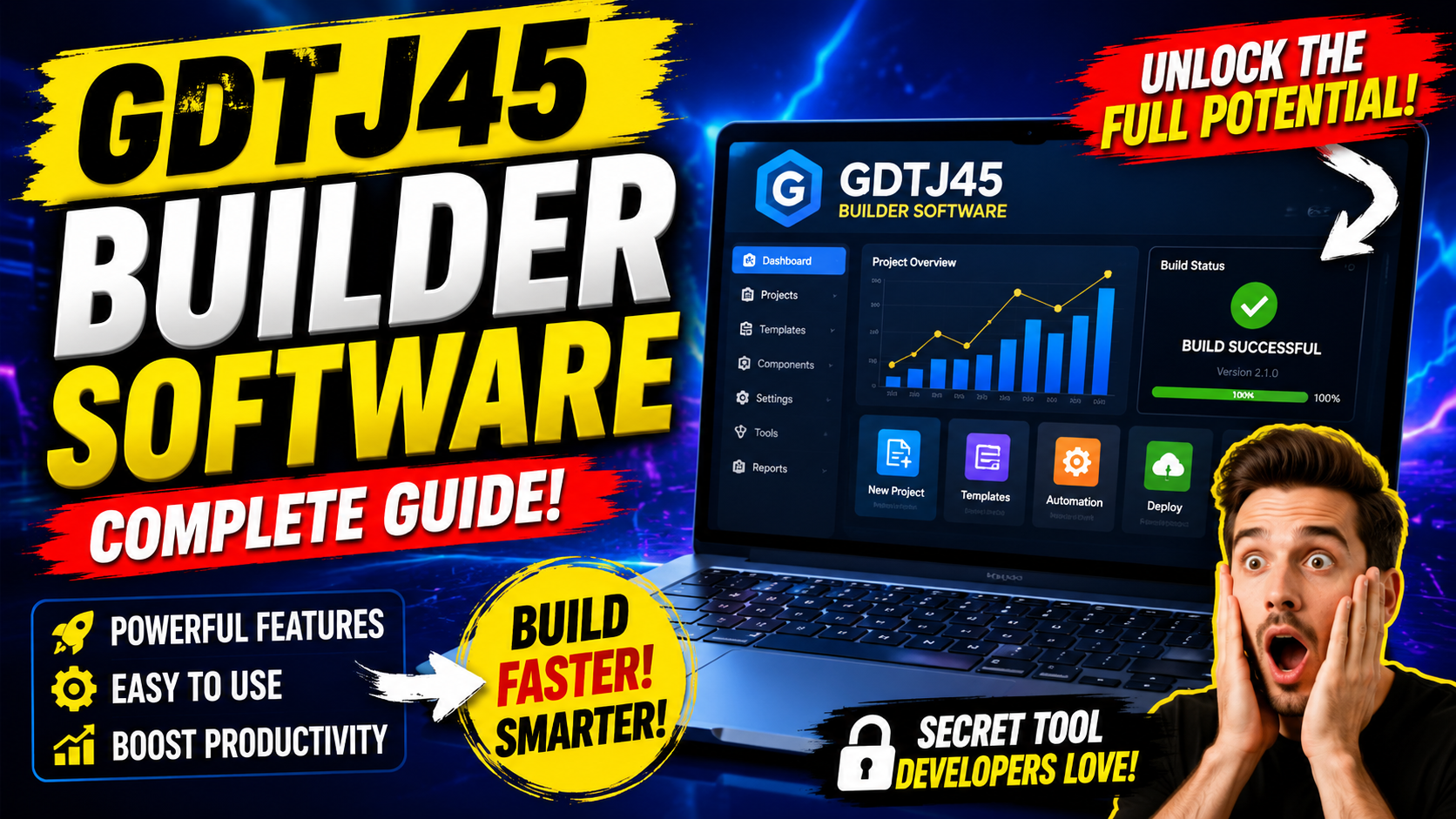
- Dashboard navigation
- Drag-and-drop components
- Menu-driven configuration
- Visual project management
- Easy access to project settings
This design makes builder software suitable for both beginners and experienced professionals.
Unique Aspects That Differentiate It
Potential distinguishing characteristics may include:
- Faster project setup
- Simplified workflows
- Reduced coding requirements
- Better automation
- Flexible configuration options
- Modular project organization
These builder software features can improve overall productivity compared to traditional manual development methods.
How GDTJ45 Builder Software Works
Understanding the details of gdtj45 builder software becomes easier when looking at a typical workflow.
Step 1: Install the Software
Download and install the application from a trusted source.
Step 2: Create a New Project
Start a new project using:
- Blank template
- Existing template
- Imported project
Step 3: Configure Settings
Set project preferences such as:
- Build options
- Output location
- Dependencies
- Modules
Step 4: Build the Project
The builder processes the project configuration and generates the required output automatically.
Step 5: Test and Deploy
After building:
- Test functionality
- Fix errors
- Deploy the final application
Basic Technical Overview
Builder software generally works by:
- Reading project configuration files
- Organizing project resources
- Compiling required components
- Generating executable or deployment packages
- Managing dependencies automatically
This reduces manual coding and repetitive setup tasks.
Main Use Cases
Many organizations rely on builder tools for everyday development tasks.
Practical Applications
Possible uses include:
- Software project creation
- Application packaging
- Internal business tools
- Development automation
- Configuration management
- Testing workflows
- Deployment preparation
Industries That Benefit
Builder software is useful across many industries, including:
- Software development
- Information technology
- Education
- Manufacturing
- Healthcare
- Financial services
- Government organizations
- Enterprise IT departments
Benefits of Using GDTJ45 Builder Software
Users often choose builder software because it saves time and improves project consistency.
Advantages
Some common benefits include:
- Faster development
- Better organization
- Reduced manual work
- Improved workflow
- Easier collaboration
- Standardized project structure
- Simplified maintenance
- Reduced human error
Productivity Improvements
Builder software can improve productivity by:
- Automating repetitive tasks
- Managing dependencies
- Organizing project files
- Speeding up deployment
- Reducing configuration mistakes
This allows development teams to focus more on creating features than managing setup processes.
How to Get Started
If you have access to GDTJ45 Builder Software, follow these general steps.
Installation Guide
- Obtain the installer from a trusted source.
- Verify the file before running it.
- Complete the installation process.
- Launch the software.
- Configure your workspace.
- Create your first project.
System Requirements
Requirements vary by software version, but builder software commonly needs:
- Windows, Linux, or macOS (depending on compatibility)
- Modern multi-core processor
- 4–8 GB RAM (or more for larger projects)
- Adequate free storage space
- Internet connection (if updates or licensing are required)
Always confirm the official requirements for the specific version you intend to use.
Tips for Beginners
To get started smoothly:
- Read the available documentation.
- Start with a simple project.
- Explore built-in templates.
- Save backups regularly.
- Keep the software updated.
- Learn keyboard shortcuts.
Pros and Cons
Pros
- Easy project organization
- Time-saving automation
- Improved productivity
- Beginner-friendly workflows
- Reduced repetitive tasks
- Better consistency across projects
Cons
- Limited publicly available documentation for GDTJ45 specifically
- May require technical knowledge for advanced features
- Unknown long-term support status
- Compatibility depends on the software version
- Feature availability may vary
Common Issues and Troubleshooting
Like many development tools, builder software can encounter occasional problems.
Common Problems
- Installation failures
- Missing dependencies
- Build errors
- Configuration issues
- Slow performance
- Compatibility conflicts
Easy Solutions
Try these troubleshooting steps:
- Restart the software.
- Update to the latest version.
- Verify project configuration.
- Reinstall missing dependencies.
- Check system requirements.
- Run with administrator privileges if appropriate.
- Review build logs for specific error messages.
These steps resolve many common builder software issues.
Is GDTJ45 Builder Software Safe and Reliable?
Security depends primarily on where the software comes from.
Security Considerations
For safer use:
- Download only from a trusted or official source.
- Scan installation files with antivirus software.
- Verify file integrity when checksums are provided.
- Keep the software updated.
- Avoid unofficial or modified versions.
Trustworthiness
Because there is limited verified public information about GDTJ45 Builder Software, it’s important to:
- Confirm the publisher’s identity.
- Review available documentation.
- Test the software in a safe environment before deploying it in production.
- Ensure it complies with your organization’s security policies.
Alternatives to GDTJ45 Builder Software
If you’re comparing options, several established builder and development tools are worth considering.
Popular Alternatives
- Visual Studio
- Eclipse IDE
- IntelliJ IDEA
- Apache Maven
- Gradle
- CMake
- Jenkins (for build automation)
Brief Comparison
| Tool | Best For | Difficulty |
|---|---|---|
| GDTJ45 Builder Software | Specialized builder workflows (where applicable) | Unknown |
| Visual Studio | Windows application development | Beginner to Advanced |
| Eclipse | Java development | Intermediate |
| IntelliJ IDEA | Professional software development | Intermediate |
| Maven | Java project management | Intermediate |
| Gradle | Build automation | Intermediate to Advanced |
| CMake | Cross-platform project building | Advanced |
Future of GDTJ45 Builder Software
As automation continues to shape software development, builder tools are expected to become more intelligent and user-friendly.
Future enhancements could include:
- AI-assisted project generation
- Cloud-based development
- Improved automation
- Better security features
- Faster build performance
- Cross-platform compatibility
- Enhanced collaboration tools
If GDTJ45 Builder Software continues to evolve, these capabilities would align with broader trends in modern development tools.
Frequently Asked Questions
Is GDTJ45 Builder Software free?
Public licensing information is not widely available. Check the software provider for the latest licensing details.
Is it suitable for beginners?
If it follows the design of most builder tools, beginners can start with basic projects while gradually learning advanced features.
Can businesses use it?
Yes, builder software is commonly used in business environments for application development, project management, and workflow automation, though GDTJ45’s specific licensing and enterprise capabilities should be verified.
Does it reduce coding?
Many builder tools automate repetitive configuration and build tasks, reducing—but not eliminating—the amount of manual coding required.
Conclusion
Understanding the details of gdtj45 builder software helps users make informed decisions before adopting any development solution. While publicly verified information about GDTJ45 Builder Software remains limited, builder software in general offers valuable benefits such as automation, simplified project management, improved productivity, and streamlined development workflows.
Before using GDTJ45 Builder Software, verify its source, documentation, and compatibility with your environment. If it meets your requirements, it could become a useful addition to your development toolkit.
Ready to explore builder software? Compare GDTJ45 Builder Software with other leading development tools, evaluate its features carefully, and choose the solution that best supports your projects and workflow.