
Table of Contents
Street lighting is important for safety, travel, and community life. However, many rural areas still struggle with poor lighting because electricity is expensive or not available. At the same time, oil palm farms produce large amounts of waste every year. Instead of throwing this waste away, it can become a useful source of clean energy.
The self cleaning streetlight oil palm waste idea brings these two challenges together. It uses oil palm waste to produce energy and combines it with self-cleaning streetlights that stay bright with very little maintenance. This smart solution helps villages, farms, schools, and remote communities enjoy reliable lighting while protecting the environment.
What Is a Self Cleaning Streetlight Oil Palm Waste System?
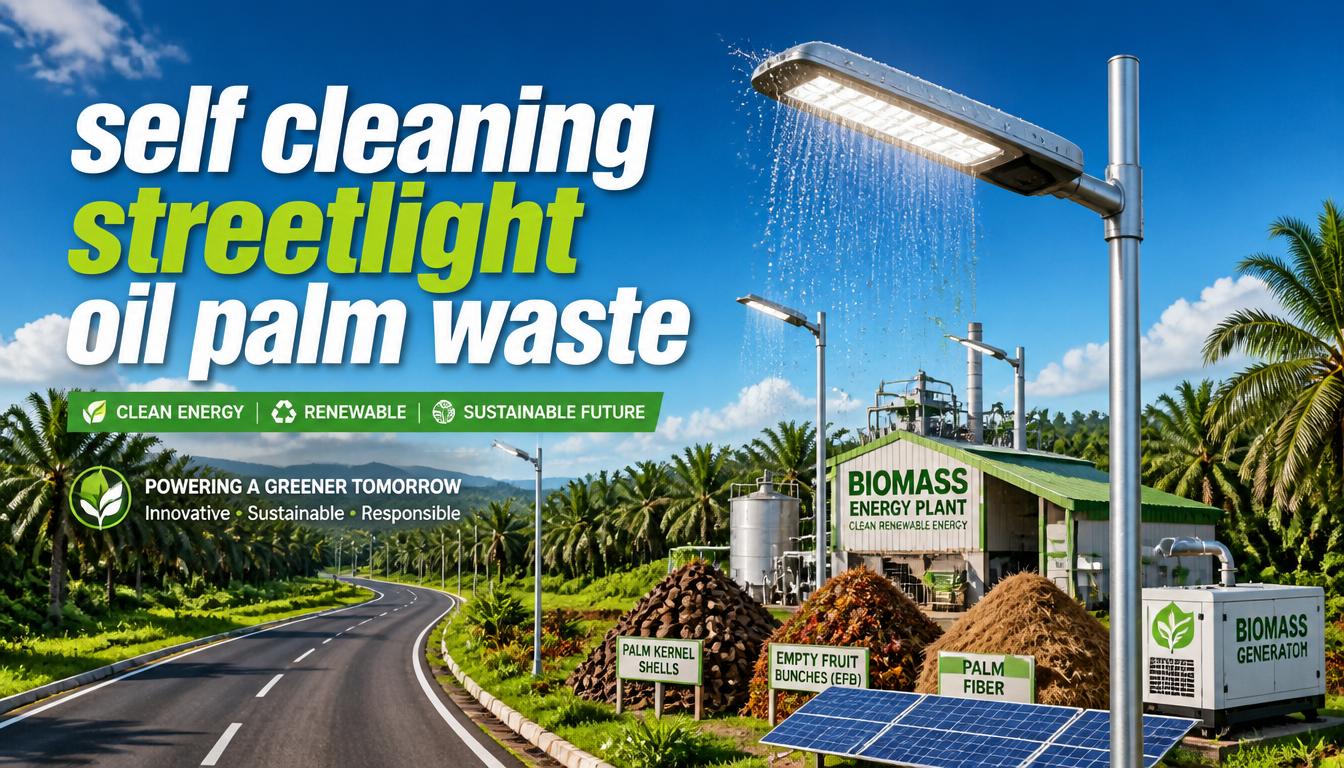
A self cleaning streetlight oil palm waste system is a modern lighting solution that uses waste from oil palm farming to produce electricity for LED streetlights. The streetlights also have a special surface that removes dust and dirt naturally or with automatic cleaning technology. This means the lights stay bright for a long time without needing frequent cleaning.
Oil palm waste includes empty fruit bunches, palm kernel shells, and palm fibers. These materials are often left unused or burned, which creates pollution. Instead, they can be processed into biomass fuel that generates electricity. This clean energy can power streetlights in places where the electric grid is weak or unavailable.
The self-cleaning feature is another important part of the system. A special coating or washing method keeps the light cover clean. When the cover stays clear, the light shines brighter and uses energy more efficiently. This reduces maintenance costs and helps the streetlight work well throughout the year.
This system supports cleaner communities, lower energy costs, and better use of natural resources. It also shows how farming waste can become something valuable instead of becoming an environmental problem.
Why Oil Palm Waste Is a Valuable Energy Source
Every year, the palm oil industry creates millions of tons of leftover materials. Many people think these leftovers have no value, but they actually contain stored energy. When processed correctly, they become a renewable fuel that can replace diesel or other fossil fuels.
Palm kernel shells are one of the best biomass fuels because they burn efficiently and produce steady heat. Empty fruit bunches and palm fibers can also be converted into biogas or used in biomass power plants. This helps reduce waste while creating useful electricity for nearby communities.
Using oil palm waste also supports a circular economy. Instead of throwing away valuable materials, farms reuse them to create clean energy. As a result, less waste ends up in landfills or is burned in open fields. This helps reduce smoke, air pollution, and greenhouse gas emissions.
An expert insight is that the best results happen when biomass plants are built close to palm oil mills. This keeps transport costs low and makes the entire system more efficient, affordable, and environmentally friendly over the long term.
How the Self-Cleaning Technology Works
Streetlights often collect dust, insects, bird droppings, and dirt. Over time, these materials block the light and make roads darker. Workers must clean the lamps regularly, which increases maintenance costs. Self-cleaning technology solves this problem in a simple way.
Many systems use a titanium dioxide coating. When sunlight reaches the coated surface, it breaks down organic dirt. Later, rainwater washes away the loose particles. The lamp stays cleaner without using chemicals or extra electricity. This process works quietly every day.
Some advanced models use small water spray systems or special water-repelling surfaces. These designs stop dirt from sticking to the lamp cover. Therefore, the streetlight continues giving bright and even lighting for a much longer period.
This technology is especially useful in farming areas where dust levels are high. Cleaner lamps improve road safety, reduce maintenance visits, and help local governments save money throughout the life of the project.
Benefits for Rural Communities and the Environment
Many villages do not have enough money to install traditional streetlights. Diesel generators are expensive to run, and electricity lines may not reach remote areas. A biomass-powered lighting system offers a practical and affordable solution for these communities.
The system also creates environmental benefits. Instead of burning palm waste in open fields, communities convert it into clean energy. This lowers harmful emissions and reduces air pollution. At the same time, energy from renewable sources replaces fossil fuels.
People also enjoy social benefits. Bright streets improve safety at night, help students walk home after school, and support local businesses that stay open later. Better lighting makes public spaces more welcoming and encourages community activities.
A good example can be found in palm-producing regions where plantation waste already powers small energy systems. Adding self-cleaning streetlights allows these communities to improve public lighting while making better use of resources that were once treated as waste.
Challenges and Future Improvements
Although the self cleaning streetlight oil palm waste system offers many advantages, it also has some challenges. Building biomass facilities requires investment, skilled workers, and proper planning. Small communities may need government support or partnerships to start these projects.
Weather conditions also affect energy production. During seasons with less biomass or heavy rain, energy output may decrease. However, many projects solve this problem by combining biomass with solar panels or battery storage. This creates a more reliable power supply throughout the year.
Building Stronger Community Projects
Successful projects often include more than technology. They also focus on education and local participation.
- Train local technicians.
- Teach safe biomass handling.
- Create maintenance schedules.
- Encourage community ownership.
- Monitor system performance regularly.
In addition, local governments, universities, and engineers can work together to improve system design. Better planning leads to longer equipment life and lower operating costs.
New Ideas for the Future
Researchers continue improving both biomass energy and self-cleaning technology.
- Stronger protective coatings.
- Smarter IoT monitoring systems.
- More efficient biomass generators.
- Better battery storage.
- Hybrid wind and solar support.
Overall, these improvements can make future streetlight systems even more reliable, affordable, and environmentally friendly for communities around the world.
Why This Innovation Matters for Sustainable Development
The self cleaning streetlight oil palm waste concept is much more than a lighting project. It shows how renewable energy, smart engineering, and waste recycling can work together to solve real-world problems. Instead of seeing agricultural waste as a burden, communities can turn it into a valuable resource.
This approach supports cleaner cities, safer roads, and lower carbon emissions. It also creates new jobs in biomass processing, equipment maintenance, and renewable energy management. Therefore, the project supports both economic growth and environmental protection at the same time.
Supporting Global Sustainability Goals
This technology contributes to many important sustainability efforts.
- Clean and affordable energy.
- Responsible waste management.
- Climate change reduction.
- Safer public spaces.
- Stronger rural development.
Also, many countries are looking for renewable energy solutions that fit local conditions. Palm-producing regions already have the materials needed to make this idea successful.
A Practical Choice for the Future
Communities need solutions that are easy to maintain and affordable to operate.
- Lower maintenance costs.
- Cleaner and brighter roads.
- Better use of farm waste.
- Reliable off-grid lighting.
- Long-term environmental benefits.
Finally, combining biomass energy with self-cleaning streetlights creates a smart system that can continue serving communities for many years while reducing waste and protecting nature.
Conclusion
The self cleaning streetlight oil palm waste system is a creative way to solve two problems at once. It turns agricultural waste into useful energy while keeping streetlights clean with very little maintenance. This makes roads safer, lowers operating costs, and helps protect the environment.
As renewable energy continues to grow, solutions like this will become even more important. Communities that use local resources wisely can reduce pollution, improve public safety, and build a more sustainable future. With good planning and modern technology, this smart lighting system has the power to brighten lives for many years.
FAQs
Q: What is a self cleaning streetlight oil palm waste system?
A: It is a street lighting system that uses oil palm waste for energy and includes technology that keeps the lamp clean automatically.
Q: What types of oil palm waste are used?
A: Palm kernel shells, empty fruit bunches, and palm fibers are commonly used to produce biomass energy.
Q: How does the self-cleaning feature work?
A: Most systems use special coatings or automatic cleaning methods to remove dirt and keep the lamp bright.
Q: Where is this system most useful?
A: It is ideal for rural villages, plantations, schools, industrial areas, and remote communities without reliable electricity.
Q: Can this system reduce maintenance costs?
A: Yes. Cleaner lamp surfaces reduce the need for regular cleaning, lowering maintenance expenses over time.
Q: Is this technology environmentally friendly?
A: Yes. It uses renewable biomass energy, reduces waste, lowers pollution, and decreases dependence on fossil fuels.