
Table of Contents
The New York Times Connections puzzle has become one of the most popular word games on the internet. Every day, thousands of players open the puzzle and try to sort sixteen words into four correct groups. Some days the puzzle feels easy, while other days it can leave even experienced players scratching their heads.
This is one reason why searches for nyt connections forbes have grown so much. Many players want a little help without ruining the puzzle. They enjoy solving the challenge on their own, but sometimes they need a small clue to keep moving forward. Forbes has become a popular place for daily hints because it gives readers different levels of help before revealing the final answers.
In this guide, we will explore why so many people look for Connections hints, how Forbes presents its puzzle guides, and how you can improve your own puzzle-solving skills. Whether you are new to Connections or play every day, this article will help you understand the game better and enjoy it even more.
What Is NYT Connections and Why Is It So Popular?
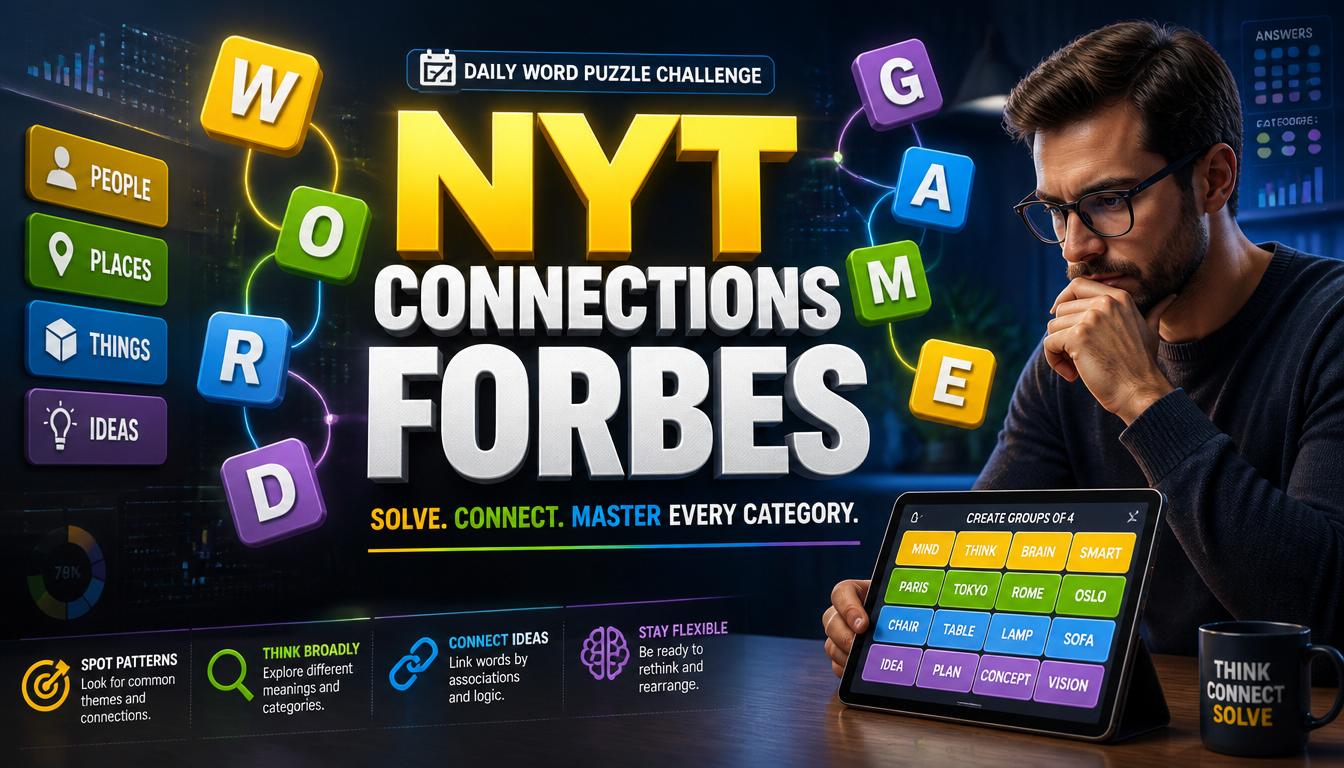
NYT Connections is a daily word puzzle created by The New York Times. In each puzzle, players see sixteen words and must place them into four groups of four. Each group shares a hidden connection. Some groups are easy to spot, while others require deeper thinking and careful observation.
What makes the puzzle special is that many words can seem to belong to more than one group. For example, a word may fit into a sports category and also fit into a movie-related category. This creates confusion, but it also makes the game exciting. Players must look closely and think about different meanings before making a choice.
Another reason for the puzzle’s popularity is its short playing time. Most people can finish a game in just a few minutes. This makes it easy to enjoy during breakfast, during a work break, or before going to bed. Unlike longer games, Connections fits nicely into a busy daily schedule.
The puzzle also encourages pattern recognition. Instead of testing only vocabulary knowledge, it challenges players to find relationships between words. This makes every puzzle feel fresh and interesting. A player might see categories related to geography one day and categories related to television shows the next day.
The game also creates a shared experience. Millions of people solve the same puzzle on the same day. Friends often compare results, family members discuss difficult categories, and puzzle fans share their thoughts online. This sense of community keeps people coming back each day.
Many experts believe that puzzle games help keep the brain active. While Connections is mainly meant for fun, it also encourages problem-solving and flexible thinking. These skills can be useful in many areas of life. Because of this combination of entertainment and mental challenge, Connections has become a favorite daily activity for many people around the world.
Why So Many People Search for NYT Connections Forbes
Many players search for nyt connections forbes because they want help without immediately seeing the full solution. Forbes has built a reputation for publishing daily puzzle guides that offer hints before answers. This approach appeals to players who still want the satisfaction of solving the puzzle themselves.
Most puzzle fans do not want spoilers right away. They simply need a small clue to help them notice something they missed. A category hint can often be enough to unlock the rest of the puzzle. Forbes understands this need and creates content that gradually reveals information instead of giving everything away at once.
Another reason people visit Forbes is consistency. Players know they can find a daily article that follows a familiar structure. The guide usually includes general hints, category clues, one-word hints, and finally the complete answers. This organized format makes it easy for readers to stop reading whenever they have enough information.
Real-life examples show how useful this can be. Imagine a player who has solved three categories but cannot figure out the final group. Instead of giving up, they read a category hint. Suddenly, the relationship becomes clear, and they complete the puzzle without needing the answer. That small moment of success feels rewarding.
The popularity of daily puzzles has also increased interest in puzzle guides. Many people enjoy making puzzle solving part of their morning routine. They solve Wordle, Connections, and other games before starting their day. When they get stuck, they often look for trusted sources that provide reliable help.
Trust is important as well. Players prefer websites that explain puzzles clearly and avoid confusing layouts. Forbes has become a recognizable source because it presents information in a simple and predictable way. Readers know what to expect each day, which helps build loyalty over time.
As puzzle communities continue growing, searches related to Connections hints and answers are likely to increase. People enjoy learning, competing, and sharing experiences. Forbes has positioned itself as a useful resource for this audience, which explains why so many players search for it every day.
How Forbes Presents Daily Connections Hints and Answers
One reason Forbes stands out is its layered hint system. Instead of placing the answers at the top of the page, the articles guide readers through several stages of assistance. This method respects different skill levels and allows players to choose how much help they want.
A typical Forbes guide begins with an introduction. The writer often shares personal thoughts, comments on current events, or talks about the puzzle’s difficulty level. This creates a friendly and conversational atmosphere. Readers feel as if they are discussing the puzzle with another fan rather than reading a simple answer sheet.
After the introduction, the article usually explains how Connections works. This is helpful for new players who may not understand the game’s rules. The guide often reminds readers about the color-coded categories and the number of mistakes allowed before losing the puzzle.
The next stage includes general hints. These clues are designed to point readers in the right direction without revealing too much. Following that, category clues provide more specific guidance. Readers who need additional help can continue scrolling, while others can return to the puzzle and try again.
Finally, the complete answers appear near the bottom of the page. By placing answers last, Forbes gives players multiple chances to solve the puzzle independently. This structure balances support and challenge, which is one of the main reasons readers appreciate the format.
An expert-style insight worth noting is that layered hints encourage active thinking. When players receive only partial information, their brains continue searching for patterns. This process strengthens problem-solving skills more effectively than simply reading the solution. Educational researchers often suggest that guided discovery helps people learn better than direct instruction alone.
Because the structure is easy to follow and player-friendly, many puzzle enthusiasts return every day. They know they can get exactly the amount of help they need while still enjoying the satisfaction of solving the puzzle themselves.
Understanding the Four Color Categories in Connections
One of the most important parts of Connections is understanding the four color categories. Each color represents a different difficulty level. Learning how these categories work can greatly improve your chances of solving the puzzle successfully.
The yellow category is usually the easiest. The connections are often straightforward and easy to recognize. These categories may involve common objects, simple themes, or familiar groups of words. Many players start by looking for yellow categories because they provide a strong foundation for solving the rest of the puzzle.
Green categories are typically a little more challenging. The relationships may not be immediately obvious, but they are still fairly clear once identified. Players often need to think carefully about word meanings or shared characteristics to uncover the correct group.
Blue categories are often where the puzzle becomes more difficult. These groups may involve pop culture references, specific knowledge, or less obvious relationships. Sometimes players recognize three words in a category but struggle to identify the fourth. Patience and careful observation become especially important at this stage.
Purple categories are usually the hardest. These groups often include wordplay, hidden patterns, prefixes, suffixes, or creative language tricks. Many experienced players expect the purple category to be challenging and save it for last. Solving a purple group often creates the biggest sense of achievement.
Understanding these colors helps players develop better strategies. For example, solving yellow categories first can reduce the number of remaining words and make harder groups easier to identify. This step-by-step approach prevents players from feeling overwhelmed.
Many puzzle veterans recommend staying flexible. Just because a word seems to belong to one category does not mean it actually does. The game is designed to create misleading connections. Recognizing this fact can help players avoid common mistakes and improve their overall success rate.
Common Mistakes Players Make and How to Avoid Them
Even experienced players make mistakes in Connections. The puzzle is carefully designed to trick the brain and encourage incorrect assumptions. Understanding these common errors can help you become a stronger player over time.
One frequent mistake is focusing only on obvious relationships. A group of four words may appear connected, but one of those words could belong somewhere else. The puzzle often includes misleading patterns that tempt players into making quick decisions. Taking extra time to examine alternatives can prevent unnecessary mistakes.
Another common issue is rushing. Many players become excited when they spot a possible category and immediately submit it. However, Connections rewards careful thinking. Looking at all sixteen words before making a choice can reveal better options and reduce errors.
Some players also ignore alternative meanings. Words often have more than one definition. A word that seems related to food might actually belong to a category involving geography or entertainment. Considering multiple interpretations is an important skill that improves with practice.
Real-life examples highlight this challenge. Imagine seeing four words that all appear connected to sports. Before submitting them, ask yourself whether any of those words could fit another category more naturally. This extra step may reveal a hidden pattern you initially missed.
Another mistake involves becoming attached to a first idea. When a category feels correct, players sometimes continue forcing words into it even when evidence suggests otherwise. Successful puzzle solvers remain open to changing their opinions as new information appears.
Finally, many players become frustrated too quickly. Some puzzles are intentionally difficult. Taking a short break can often provide a fresh perspective. Returning after a few minutes may help you notice connections that were invisible before. Patience is one of the most valuable skills in Connections and can make a significant difference in your results.
Best Strategies to Solve Connections Faster and Smarter
The best Connections players rarely rely on luck. Instead, they use proven strategies that improve accuracy and increase their chances of success. While every puzzle is different, certain techniques work consistently across many games.
Start With the Most Obvious Group
A good first step is identifying the easiest category. This often reduces the number of remaining words and makes other patterns easier to spot. Starting with confidence can also create positive momentum for the rest of the puzzle.
Helpful habits include:
- Look for words that clearly belong together.
- Check for common themes.
- Eliminate solved words quickly.
- Review remaining words after each success.
Therefore, solving one category early can simplify the entire puzzle and make later decisions easier.
Think About Multiple Meanings
Many Connections puzzles use words that have more than one meaning. Looking beyond the most obvious definition can reveal hidden relationships that are easy to miss at first glance.
Useful approaches include:
- Consider different definitions.
- Look for wordplay and puns.
- Notice prefixes and suffixes.
- Search for cultural or entertainment references.
Außerdem, experienced players often train themselves to question their first assumption. This habit helps them discover categories that others may overlook.
Stay Flexible and Patient
Sometimes the best move is doing nothing for a moment. If a category does not feel completely right, it may be better to wait and gather more information. Patience often prevents mistakes.
Important reminders:
- Do not force weak connections.
- Recheck every word carefully.
- Take short breaks if needed.
- Learn from previous puzzles.
Jedoch, even strong players make mistakes occasionally. The goal is not perfection but steady improvement. Therefore, each puzzle becomes an opportunity to develop stronger problem-solving skills.
Why Connections Continues to Grow and What the Future May Hold
Connections has become more than a simple word game. It is now part of many people’s daily routine. Players enjoy the challenge, the social interaction, and the excitement of discovering hidden patterns. This combination has helped the game build a loyal audience around the world.
The Growing Community Around Daily Puzzles
The puzzle community continues expanding every year. People enjoy discussing difficult categories and comparing results with friends and family.
Popular community activities include:
- Sharing scores online.
- Discussing difficult categories.
- Comparing solving strategies.
- Helping new players learn the game.
Außerdem, the shared daily experience creates a strong sense of connection among players. Everyone faces the same challenge and can discuss it together.
Why Helpful Guides Remain Important
As the audience grows, many players will continue looking for hints and explanations. Helpful guides provide support without removing the fun of solving the puzzle independently.
Benefits of quality guides include:
- Clear explanations.
- Gradual hints.
- Learning opportunities.
- Better understanding of puzzle patterns.
Daher, trusted resources will likely remain valuable for both beginners and experienced players.
Looking Ahead
Experts believe puzzle games will continue attracting large audiences because they combine entertainment with mental exercise. Connections fits this trend perfectly.
Schließlich, the future of the game looks bright. New players discover it every day, while long-time fans continue returning for fresh challenges. Whether you solve every category alone or occasionally use hints, the most important goal is enjoying the experience and having fun while learning something new.
Conclusion
Connections has earned its place as one of the most enjoyable daily word puzzles available today. Its mix of creativity, pattern recognition, and problem-solving makes each puzzle feel rewarding. Many players search for helpful resources because they want guidance without losing the satisfaction of finding answers on their own.
The popularity of nyt connections forbes shows that puzzle fans value clear hints, reliable explanations, and a player-friendly approach. By understanding the color categories, avoiding common mistakes, and using smart solving strategies, you can improve your skills and enjoy the game even more. Most importantly, remember that every puzzle is a chance to learn, think creatively, and have fun.
FAQs
Q: What is NYT Connections?
A: It is a daily word puzzle where players group sixteen words into four connected categories.
Q: Why do people search for Forbes Connections hints?
A: Many players want clues that help them solve the puzzle without immediately seeing the answers.
Q: What do the category colors mean?
A: Yellow is usually easiest, followed by green, blue, and purple as the hardest.
Q: Are Connections hints better than answers?
A: For many players, hints are better because they preserve the challenge and learning experience.
Q: How can I improve at Connections?
A: Practice regularly, look for multiple meanings, and stay patient when solving difficult categories.
Q: Is Connections free to play?
A: Yes, the daily puzzle can be played online, though some additional features may require a subscription.